Defining the based treasury model
Traditional corporate treasury management focuses on optimizing monetary assets, managing daily liquidity, and ensuring sufficient cash reserves to sustain ongoing operations. It is a defensive discipline designed to protect balance sheets and fund strategic initiatives with predictable, regulated instruments.
The based treasury model in Web3 shifts this focus. Instead of merely preserving capital, it treats protocol tokens as active infrastructure. A based treasury prioritizes long-term protocol health and yield sustainability over short-term token price speculation. It aligns financial incentives with the network’s actual usage and governance, turning treasury assets into tools for ecosystem growth rather than just static reserves.
A based treasury prioritizes long-term protocol health and yield sustainability over short-term token price speculation.
This distinction matters because Web3 protocols operate without traditional revenue streams. Their treasuries must generate yield to fund development, security audits, and community incentives. When a treasury is "based," it avoids the pitfalls of high-risk speculation that can drain resources during market downturns. Instead, it leverages stable, protocol-native yield sources that reinforce the token’s utility and governance structure.
How it differs from traditional models
In traditional finance, treasury managers are fiduciaries bound by strict compliance and risk aversion. Their success is measured by stability and liquidity ratios. In Web3, treasury managers are often community stewards or DAOs, accountable to token holders. Their success is measured by protocol vitality, user adoption, and long-term decentralization.
This shift requires a different mindset. A based treasury doesn’t just hold assets; it deploys them strategically to support the protocol’s core functions. This might mean staking tokens to secure the network, providing liquidity to essential trading pairs, or funding grants for developers building on the platform.
The goal is sustainability. By aligning treasury activities with the protocol’s long-term vision, based treasuries create a feedback loop where financial health supports network growth, which in turn increases the value of the treasury assets. This is a fundamental departure from the traditional model, where treasury management is often siloed from product development and user experience.
Core infrastructure components
Building a Based Treasury requires more than just holding assets; it demands a layered technical architecture that balances security with operational efficiency. The foundation rests on three pillars: multisig wallets for access control, rigorous smart contract audits for code integrity, and robust custody solutions for asset safety. Treating these components as a unified stack prevents single points of failure.
Multisig wallets and access control
Multisignature (multisig) wallets are the standard for secure treasury operations. By requiring multiple private keys to authorize transactions, they eliminate the risk associated with a single compromised key. Popular implementations like Gnosis Safe allow for customizable thresholds, ensuring that no single individual can unilaterally move funds. This structure is essential for both individual treasuries and corporate entities seeking to mitigate internal fraud risks.
Smart contract audits
Before deploying any new protocol or integrating with DeFi platforms, independent smart contract audits are non-negotiable. Auditors review the codebase for vulnerabilities, logic errors, and potential exploit vectors. Reputable firms provide detailed reports that highlight severity levels and remediation steps. Relying on unaudited code is akin to leaving your vault door unlocked; the risk of total loss is unacceptably high. Always verify audit status and review the findings before committing capital.
Custody solutions
Choosing the right custody model depends on your risk tolerance and operational needs. Self-custody offers maximum control but requires significant technical expertise. Institutional custodians provide insurance and compliance frameworks but introduce counterparty risk. Hybrid models often strike the best balance, combining cold storage for long-term holdings with hot wallets for daily operations.
| Feature | Self-Custody | Institutional Custody | Hybrid Model |
|---|---|---|---|
| Control | Full | Limited | Shared |
| Insurance | None | Typically Yes | Partial |
| Complexity | High | Low | Medium |
| Best For | Experts | Large Corps | Balanced Needs |
The ACT & AFP Guide to Treasury Technology emphasizes that integrating these tools requires careful planning. A well-designed treasury management system (TMS) should seamlessly connect your multisig infrastructure with your custody providers, ensuring real-time visibility and automated reconciliation. Without this integration, manual errors can quickly erode the security benefits of your technical stack.
Yield generation strategies
Generating yield from treasury assets requires balancing safety with return. The goal is to sustain protocol operations without exposing the treasury to excessive volatility. We focus on stablecoins and low-risk instruments that provide predictable cash flow.
Stablecoin lending
Lending stablecoins is the most direct way to earn yield. Protocols like Aave and Compound allow you to deposit USDC or USDT and earn interest from borrowers. This strategy is low-risk if you stick to audited, high-liquidity pools. However, smart contract risk remains. Always check the protocol’s audit history and insurance funds.
Treasury bills
Short-term U.S. Treasury bills offer a risk-free baseline. You can buy T-bills directly through TreasuryDirect or via tokenized products. They pay fixed interest every six months and mature in 4-52 weeks. This provides a stable floor for your yield, especially when crypto markets are choppy.
Diversified yield
Don’t rely on one source. Mix stablecoin lending with T-bills. This diversification smooths out returns. If lending rates drop, T-bills compensate. If crypto rates spike, lending boosts income. The result is a more resilient treasury that can weather market swings.

Watch the Market, Manage the Risk
Treasury management is not just about holding assets; it is the strategic oversight of liquidity, risk, and compliance. For a based treasury, this means treating volatility as a constant variable rather than an anomaly. You need a framework that monitors market conditions in real-time and prepares for regulatory shifts before they impact your balance sheet.
Start by visualizing the volatility you are exposed to. Tracking major pairs like ETH/USD provides immediate context for your treasury’s health. If your assets are pegged to volatile tokens, you must understand the correlation between your holdings and broader market movements. This isn't about predicting the top or bottom; it's about knowing your exposure at any given second.
Beyond price action, risk management requires a layered approach to smart contract and regulatory risk. Smart contract failures are rarely isolated incidents; they often stem from untested upgrades or reliance on deprecated libraries. Regular audits and conservative exposure limits to single protocols are non-negotiable. Similarly, regulatory changes can freeze liquidity overnight. Diversifying across jurisdictions and maintaining clear compliance documentation ensures you aren't caught off guard when policies shift.
Finally, keep your liquidity buffers dynamic. Static cash reserves quickly become insufficient during market stress. Adjust your stablecoin allocations based on current yield environments and network congestion. The goal is resilience: a treasury that can withstand shocks without forced liquidations or operational paralysis.
Building a sustainable treasury checklist
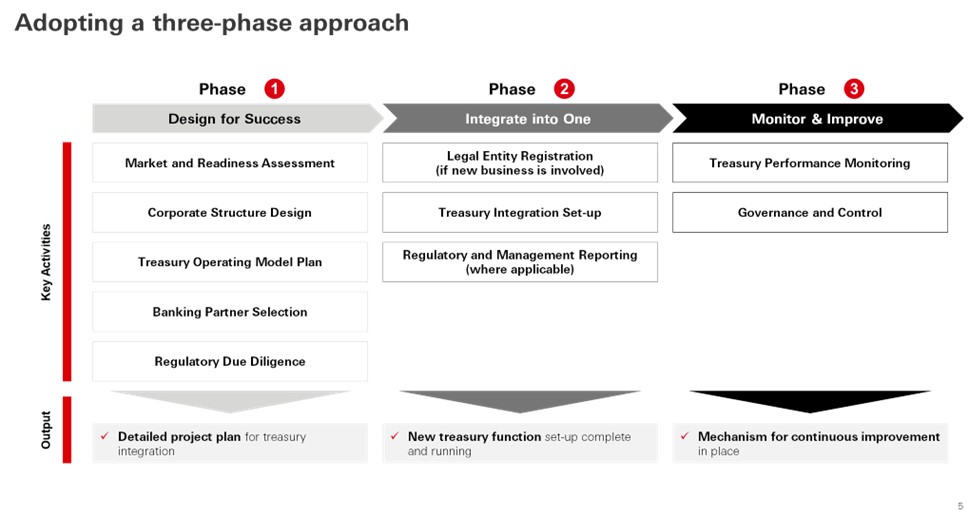
A sustainable treasury isn't just about yield; it's about survival. Before chasing higher returns, audit your infrastructure against these five operational pillars. This checklist helps you identify gaps in security, liquidity, and compliance before market volatility exposes them.
Review who has administrative access to your treasury wallets and bank accounts. Ensure multi-signature requirements are active for all significant transactions. Limit access to only those who need it for daily operations, and rotate keys regularly to reduce the risk of unauthorized transfers.
Ensure you hold enough liquid assets to cover at least three months of operational expenses. Test this buffer against hypothetical scenarios, such as a sudden drop in revenue or a temporary freeze on external funding. If your liquidity dries up under moderate stress, you need to rebalance your cash reserves immediately.
If your treasury interacts with DeFi protocols, review the audit history and insurance coverage of each contract. Never deploy significant capital into unaudited or newly launched protocols. Check for any known vulnerabilities or recent exploits in the codebase, and prefer protocols with a long, transparent track record.

Confirm that your treasury structure aligns with current tax and reporting requirements in your jurisdiction. Maintain accurate records of all transactions, including gas fees and token swaps. Consult with a financial advisor familiar with digital assets to ensure you aren't inadvertently violating securities or tax laws.
Set clear thresholds for when to rebalance your treasury assets. For example, if stablecoins drop below 20% of total value, automatically move funds from other assets. Automate these rules where possible to remove emotional decision-making and ensure your risk profile stays consistent over time.
No comments yet. Be the first to share your thoughts!